

At present, the most common and easy-to-use common physical foaming agents are anionic surfactants and foam-stabilizing products, or are foam stabilizers with excellent compatibility of animal and plant surfactants, anionic surfactants based on fatty alcohol polyoxygen Sodium vinyl ether sulfate, sodium lauryl sulfate, etc. are the mainstream, and the foam stabilization system is mainly based on silicone resin polyether emulsions.

The formation of plastic foam can generally be divided into four stages.
In the first stage, the blowing agent must be completely homogeneously dispersed in the polymer, which is usually in a liquid or molten state. The blowing agent can now form a true solution in the polymer, or just be uniformly dispersed in the polymer, forming a two-phase system.In the second stage, after a large number of individual bubbles are formed, the system is transformed into a system in which the gas is dispersed in the liquid. At this time, a nucleating agent is often added to promote the formation of a large number of small bubbles. Nucleating agents are generally very fine inert particles that provide sites for the formation of a new gas phase.
In the third stage, the initially formed cells continue to expand as more gas diffuses and penetrates the polymer into the cells. If this period of time is long enough, the individual cells will come into contact with each other. If the walls separating the individual cells are ruptured, then, by this coalescence, larger cells will be formed. If the foam is mainly formed by the interconnection of cells, it is called an open-cell foam. If it is a foam formed by cells that are not connected to each other, it is called a closed-cell foam. If cell coalescence is allowed to proceed indefinitely, the foam will collapse because the gas is all automatically separated from the polymer.
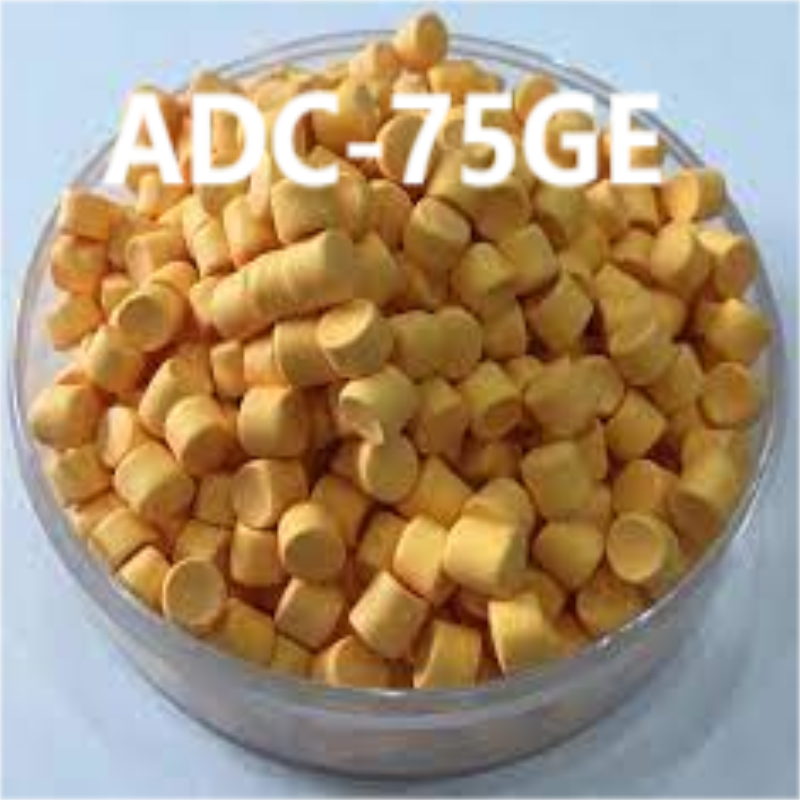
In the fourth stage, when the viscosity of the polymer increases and the cells cannot grow any more, the foam stabilizes. Polymer viscosity can be increased by cooling, cross-linking or other methods. The last three stages of the foaming process, in terms of time, can be as short as a fraction of a second, and the longest will not exceed a few seconds. The formation of foam requires the polymer to be in a liquid state. For this purpose, the polymer can be dissolved or plasticized by heating. Foam is produced in almost the same way as any ordinary plastic, usually through extrusion, rotational and injection molding, as well as plastisol processing and thermoforming. For the same reason, basically any kind of plastic can be made into foam. Polyvinyl chloride (both rigid and flexible), polystyrene, polypropylene, ABS and polyethylene, have all been made into foams on an industrial scale. The same is true for heat-resistant engineering plastics and thermoset polymers.
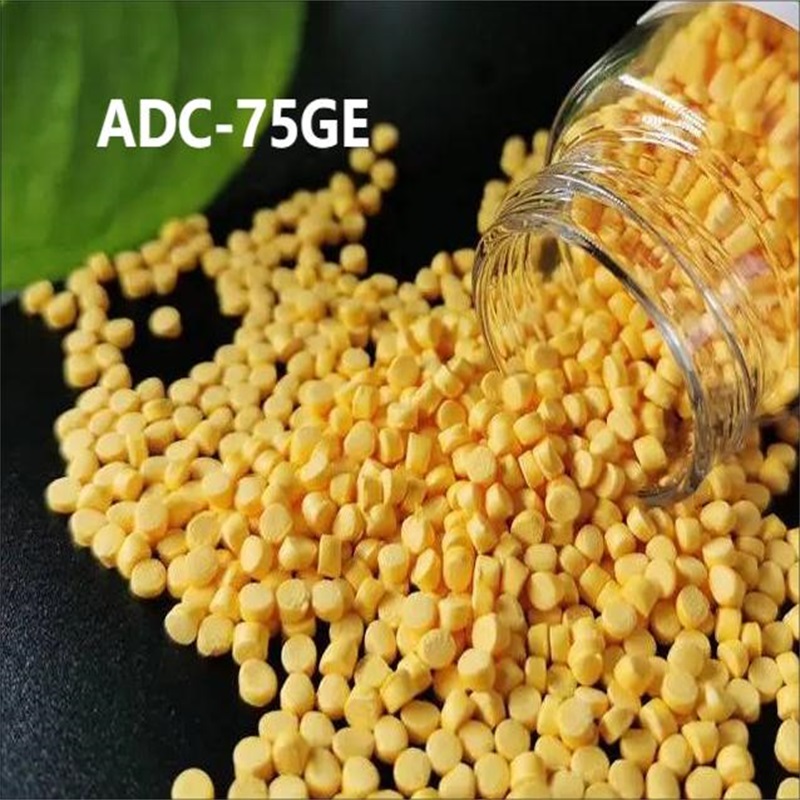
Our product foaming agent is generally used to block the gaps of doors and windows, and connect the gaps of doors and windows through its filling function to achieve sealing effect; color masterbatch foaming agent is the matrix of color masterbatch. Special color masterbatch generally uses the same resin as the product resin as the carrier, and the two have the best compatibility; as well as powder foaming agent, principle and application. Adding some fillers to plastics can improve some properties of plastics. More suitable for some special purposes; there are also plastic foaming agents, which are used to disperse liquids on the surface of solid particles to form stable foams. We have a large inventory, if you want to know more, please contact us and we will be happy to serve you.