

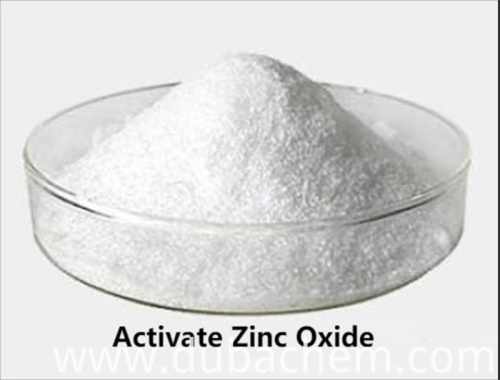
The preparation of active zinc oxide usually involves physical methods, chemical methods, biosynthesis and other pathways. Among them, physical methods such as sputtering, chemical vapor deposition, etc. can prepare active zinc oxide with high purity and crystallinity. Chemical methods can also achieve the preparation of active zinc oxide through solvothermal method, hydrothermal method, etc. In addition, biosynthetic methods use organisms such as microorganisms and plants to mediate the synthesis of active zinc oxide, which has potential advantages in green synthesis.
The application of active zinc oxide in optoelectronics is an aspect of its attention. Due to its semiconductor properties, active zinc oxide can be used to manufacture optoelectronic devices such as solar cells, photodiodes, etc. Its high electron mobility and transparency make it an ideal material for manufacturing transparent conductive films, which can be used in touch screens, displays and other fields.
In terms of photocatalysis, active zinc oxide shows good photocatalytic activity. Its band gap can match the solar spectrum, so it can degrade organic pollutants, produce hydrogen, etc. through photocatalytic reactions. This provides a potential green solution for environmental governance and the development of renewable energy.
In addition, active zinc oxide is also widely used in the field of sensors. Its high sensitivity to gases, humidity, etc. makes it an ideal material for making sensors. In fields such as medical care and environmental monitoring, the application of active zinc oxide sensors is expected to provide efficient means for real-time monitoring and diagnosis.
Overall, active zinc oxide, as a derivative of zinc oxide, exhibits excellent performance in the fields of optoelectronics, photocatalysis, sensors and other fields. Its preparation methods are diverse and its application prospects are broad, providing scientists and engineers with rich research and development space. However, with the deepening of research, challenges in stability and controllability of activated zinc oxide need to be further solved to promote its wider application in various fields.