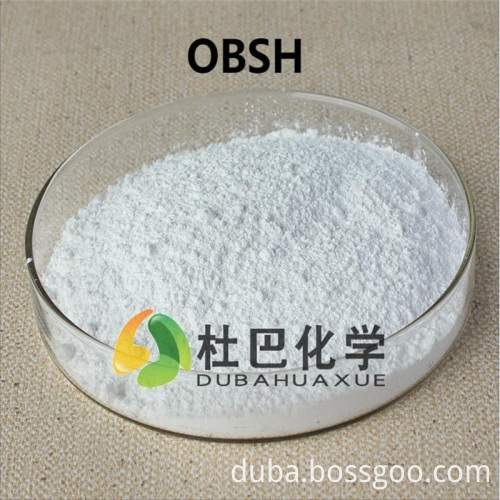
One of the advantages of using OBSH as a foaming agent is that it can produce very fine, uniform bubbles in the foam, which can result in a more consistent and high-quality product. Additionally, OBSH Blowing Agent is considered to be a relatively safe and environmentally friendly foaming agent compared to some other alternatives.
However, like any chemical, OBSH should be handled with care and appropriate safety precautions should be taken when working with it.
It is important to follow the manufacturer's instructions for use and storage, and to use appropriate protective equipment (such as gloves and goggles) when handling OBSH or any other chemical.There are several chemicals that can be used as foaming agents depending on the application. Here are a few examples:
1.Sodium laureth sulfate (SLES): This is a common foaming agent used in personal care products such as shampoos, body washes, and toothpaste. It is derived from coconut oil and is a mild surfactant that creates a rich lather.
2.Ammonium lauryl sulfate (ALS): ALS is another foaming agent commonly used in personal care products. It is a more potent surfactant than SLES and creates a more significant amount of foam.
3.Sodium bicarbonate (baking soda): Baking soda can be used as a foaming agent in baking and cooking applications. When combined with an acid, such as cream of tartar or lemon juice, it produces carbon dioxide gas, which causes the mixture to rise and expand.
4.Hydrogen peroxide: Hydrogen peroxide can be used as a foaming agent in cleaning products. When combined with other chemicals, such as sodium carbonate or sodium percarbonate, it produces oxygen gas, which creates foam and helps to lift dirt and stains.
5.Polyurethane foam: Polyurethane foam is a type of foam that is commonly used as insulation in buildings and as cushioning in furniture and mattresses. It is created by mixing two liquid components - polyol and isocyanate - which react together to produce a foam that expands and hardens.
6.Azodicarbonamide (ADA): ADA is a chemical foaming agent used in the production of plastics, such as PVC and EVA. It releases nitrogen gas when heated, which causes the plastic to expand and form a foam.
7.Polystyrene: Polystyrene is a lightweight plastic that can be used as a foaming agent in a variety of applications, including insulation, packaging, and food service products. When heated, it releases a gas that causes it to expand and form a foam.