

All kinds of Chemical Blowing Agent products currently on the market will still be widely used in the future, but the number of commonly used blowing agents may be reduced. The more important prospect lies in the research and development of new foaming technology, such as microsphere foaming agent, supercritical carbon dioxide foaming and so on. However, due to the characteristics of easy modification and universality, AC will still be the main blowing agent in many formulations for various applications in the future.
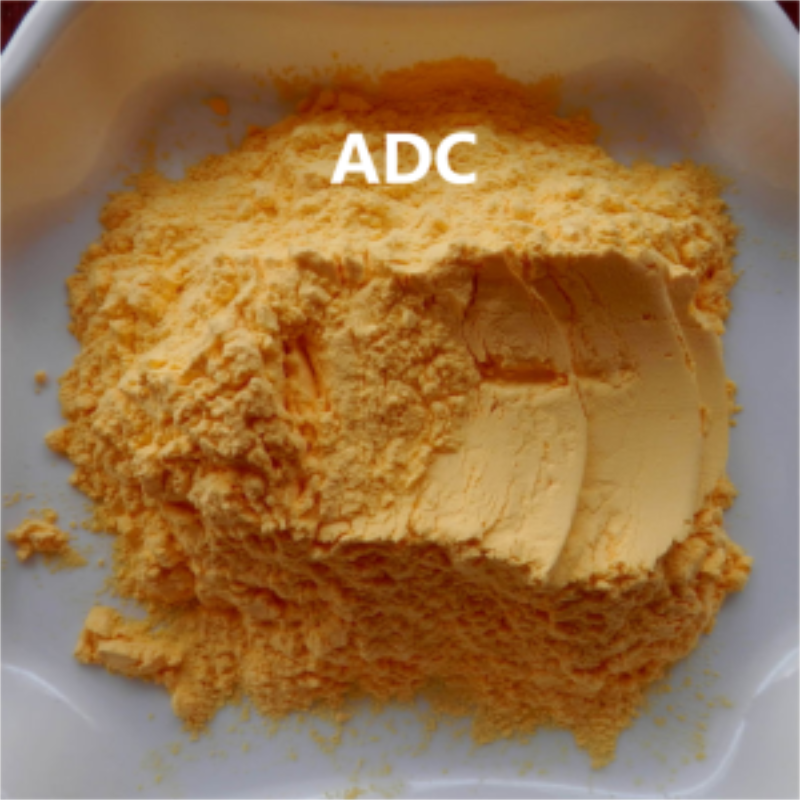
The foaming agent developed according to the specific requirements of users, especially the compound product of exothermic foaming agent and endothermic foaming agent, has increased its output and occupied a certain market share. Among general plastics, physically cross-linked and general purpose PP foams are expected to grow substantially in food packaging applications. In addition, recycled thermoplastics will be more used in foam products and will occupy a larger proportion. Recycled engineering plastics are more attractive and valued in this respect.
Guangdong Duba New Material Technology Co., Ltd. is a manufacturer and exporter specializing in the design, development and production of rubber additives and pre-dispersed masterbatches. Our Foaming Agent, Hygroscopic Agent and other products comply with international quality standards and are greatly appreciated in a variety of different markets throughout the world. As a result of our high quality products and outstanding customer service, we have gained a global sales network reaching more than 20 countries and regions.
To date, in the foam industry, people still need to pay more attention to processing technology, and some innovations in this area are expected in the future. Processes such as blow molding, rotational molding and thermoforming (such as vacuum forming of foam and extruded films and sheets) will gradually become more common processes in the production of foamed plastic products.
Evaluation and analysis of blowing agent
The evaluation of Foaming Agent performance mainly includes its chemical composition, bulk density and fluidity, specific surface area, particle size distribution, decomposition temperature and decomposition process, combustion residue, gas production, gas composition, decomposition residue, thermal performance, and substrate Process behavior, dispersibility, solubility compatibility, toxicity, etc.
The analysis of the blowing agent additive package is not only the composition and content analysis of Blowing Agent, but more importantly, the qualitative and quantitative analysis of trace additives such as foaming aids, lubricants, crosslinking agents, and nucleating agents in the additive package. Small differences in trace additives can lead to large differences in the performance of foamed products.