

What are the commonly used chemical blowing agents?
Foaming Agent ADC-75GE
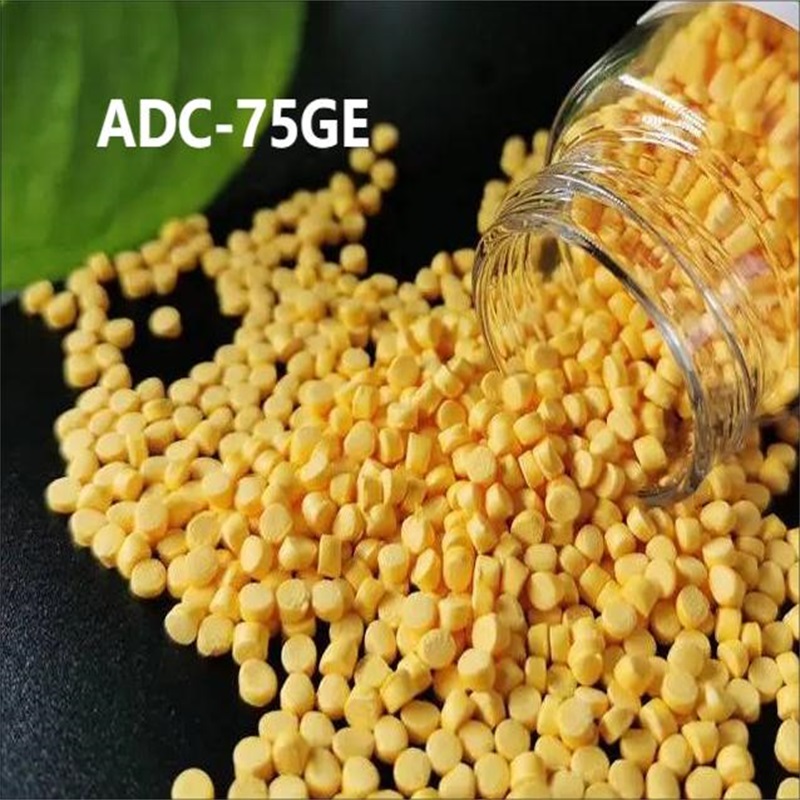
1. Blowing agent classification
Blowing agents are divided into two categories: inorganic and organic according to their chemical components. Inorganic blowing agents include sodium bicarbonate, ammonium bicarbonate, ammonium chloride, sodium carbonate and the like. Organic foaming agents include azo compounds, sulfonyl hydrazide compounds, nitroso compounds, and the like.
2. Commonly used foaming agent characteristics
Sodium bicarbonate is a non-toxic, odorless white powder, which can be slowly decomposed at about 100°C to produce CO2 and H2O, and all water is converted into water vapor. For gas generation, soft acidic substances such as stearic acid and oleic acid can be added to the rubber compound as foaming aids.
Sodium Bicarbonate Foaming Agent is off-white powder. It has no ammonia smell in dry state and has a damp smell. It begins to decompose slowly at about 60°C to generate NH3, CO2, and H2O. Theoretically, the amount of gas generation is large, but the actual amount of foaming is slightly smaller.
The gas from the thermal decomposition of the inorganic foaming agent has high permeability in the rubber, and it is difficult to produce closed-cell sponge rubber. It is suitable for the production of sponge rubber with relatively large pores and an open-pore structure.
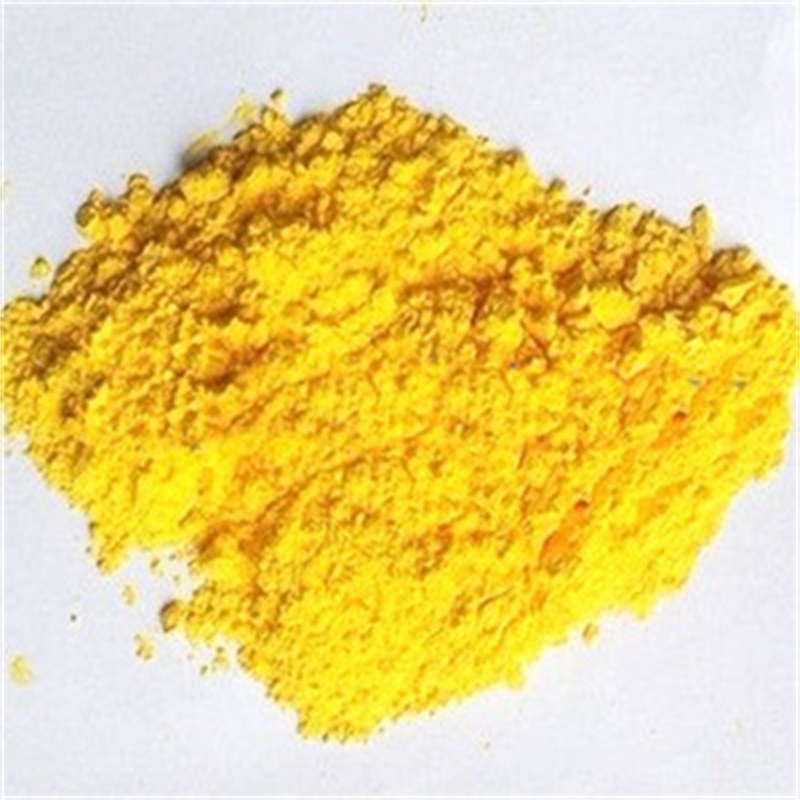
Azodicarbonamide, also known as foaming agent AC (Foaming Agent OBSH), is a light yellow powder, non-toxic, odorless, and its thermal decomposition is stable at about 200°C. Adding a foaming aid can make its thermal decomposition temperature Greatly reduced. Commonly used foaming aids are stearic acid, urea, zinc oxide, magnesium oxide, etc. The foaming agent AC has small particles and is easy to mix evenly in rubber. Ammonia gas is produced in the thermal decomposition reaction, and the ammonia gas is easy to penetrate in the rubber, and the produced sponge rubber has a large shrinkage rate.
Blowing Agent ADC
Diphenylsulfonyl hydrazide ether is a small white crystalline powder with a low thermal decomposition temperature. It starts to decompose slowly at 130°C and decomposes rapidly at 150°C. It can foam at the vulcanization temperature without the need for foaming aids. Thermal decomposition produces nitrogen and non-volatile polymers, because the gas produced is nitrogen, so the permeability in the rubber compound is small, forming a closed-cell or inter-pore pore structure, small shrinkage, small deformation, and no hole collapse.
In foamed sponge rubber products, try to choose good stability to acid, alkali, light and heat, and the microporous rubber after foaming has no pollution and discoloration; gas decomposition can be completed in a short time, and the amount of gas generation can be controlled; powder foam The particle size of the foaming agent is small, and it is easy to disperse in the rubber compound; it is a foaming agent that does not affect the vulcanization process. The choice of foaming agent, the amount of dosage, temperature control, and auxiliary foaming agent have an impact on the sponge rubber process.