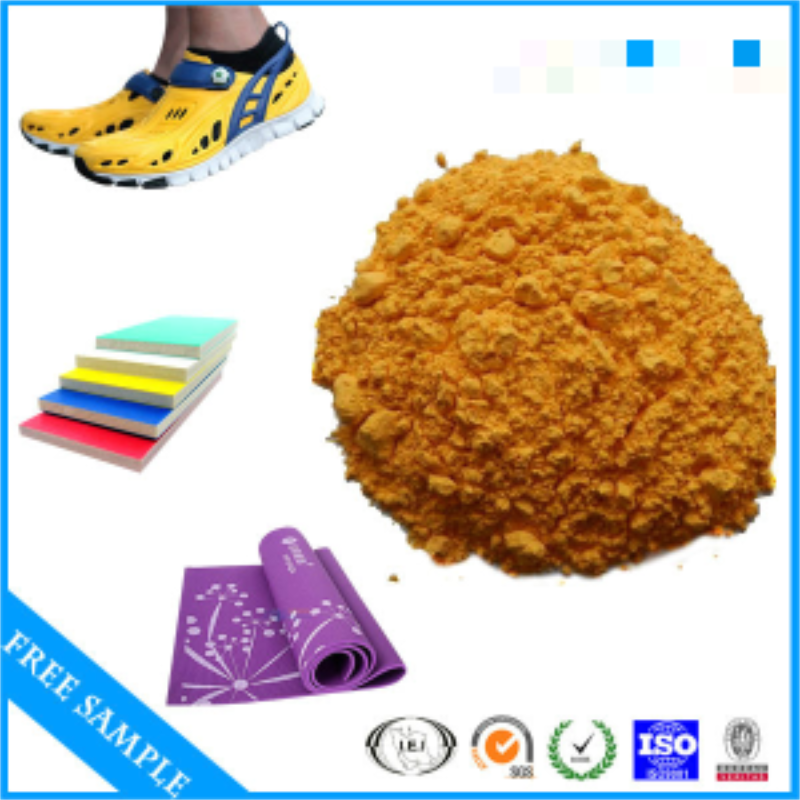
Orange crystalline powder, relative molecular weight 116.1, relative density 1.65, particle size (200 mesh pass) ≥ 99.5%, moisture ≤ 0.1%, ash content ≤ 0.1%. Soluble alkali, insoluble alcohol, gasoline, benzene, pyridine and other common organic solvents, difficult to dissolve water. The degradation temperature is 190-205°C, and it is non-flammable. Gas output is 200-300ml/g, mainly nitrogen, carbon monoxide and a small amount of carbon dioxide. Main application: suitable for pe, PvC, PS, PP, Abs, etc. Its decomposed substances are non-toxic, odorless, non-environmental polluting, and can be produced into pure white foam.
Our products are Foaming Agent
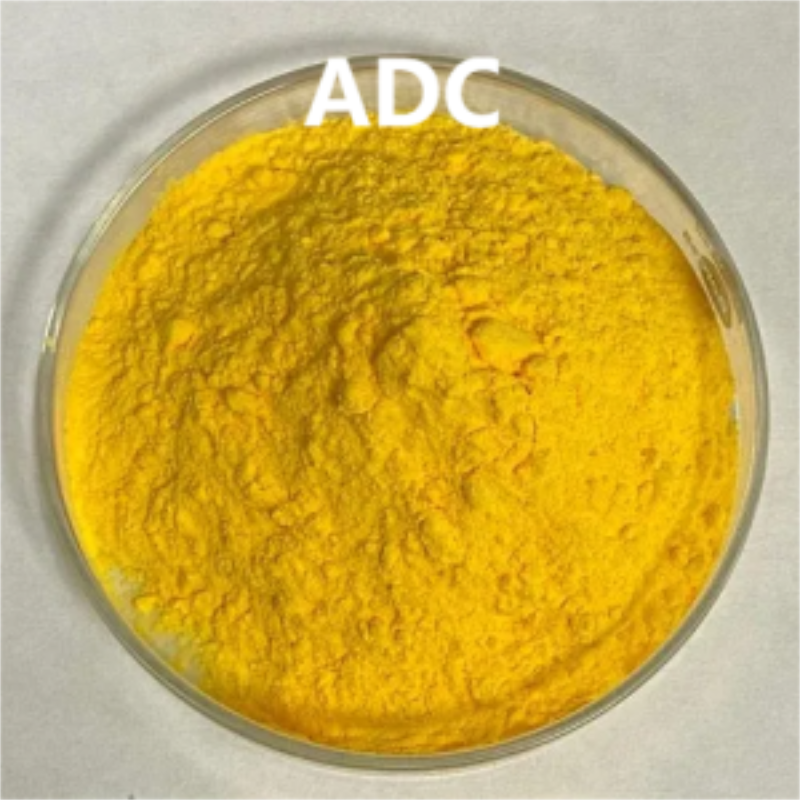
2. 2'-Azobisisobutyronitrile
White crystalline powder, relative density 1.1, volatile matter 1%, methanol insoluble matter 0.1%, melting point >99°C. Dissolve methanol, ethanol, propanol, ether, petroleum ether and other organic solvents, but not water. The degradation temperature is 98-110°C, and nitrogen gas is released, and the gas generation volume is 130-155ml/g. Slowly degrade at room temperature, and obviously change in quality after being stored at 30°C for several months, so this product should be stored below 10°C. Main application: especially suitable for PvC, and can also be used for epoxy resin, PS, phenolic resin and rubber. The degradation calorific value is low, about 125.6-167.5J/mol, so the dosage reaches 40%, which will not cause the product to burn, and can produce a white product.
Our products are Zinc Oxide
3. Diisopropyl azodicarboxylate
Orange oily liquid, relative molecular weight 202, freezing point 2.4°C, boiling point 75.5°C (33.31Pa), when heated alone, it remains stable at 240°C. The application of heat stabilizers such as lead salts, organotin compounds, cadmium soaps and zinc soaps can activate them and reduce the degradation temperature. The gas output at 100-200°C is 200-350ml/g. Dissolves common plasticizers. Main application: Liquid foaming agent, suitable for PE, PP, PvC, etc. It is easy to disperse in plastics, the cell structure is balanced and compact, and the degradation substances are odorless, non-toxic, colorless, and non-polluting. It can produce foams with very light color. By adjusting the formulation and process conditions, closed-cell or open-cell foams can be produced.
Our products are Hygroscopic Agent
4. Barium azodicarboxylate
Bright yellow powder, relative molecular mass 253.37, relative density 1.67, degradation temperature 240-250°C. The gas output is 170-175ml/g, and it will be degraded to form nitrogen, carbon monoxide, carbon dioxide, barium carbonate, etc. Insoluble in common solvents. Main application: high temperature foaming agent. The degradation temperature is high, and the process safety is good. Suitable for polymers with high softening point, especially PP.
Our products also include Comprehensive Accelerator, Accelerator.
5. Diethyl azodicarboxylate
Red odorless oily liquid. The relative molecular mass is 174.16. The decomposition temperature is 110-120°C. The gas output is 190ml/g. Soluble in plasticizers. Storage is relatively stable. Does not respond to vulcanization accelerators. Sensitive to changes in moisture and pH. Metal salts (Cu, Fe, Co, Pb, Al, Sn and other metals) can promote decomposition. Main application: Foaming agent for PVC and copolymers, PE, polyester, epoxy resin, PS, rubber. The dosage is 0.5-10%.